
Hello, my name is Eric Kinsey. I’m in Indianapolis and you are listening to Rulers and Riders, Country Nuggets volume 5, chestnuts and deep cuts from a certified country nut.
Today on the show we will be exploring the work of Johnny Paycheck, aka Donny Young, and his work as a sideman, collaborator and songwriter.
I grew up in Anderson, Indiana in the 70s/80s. A local legend among my parents generation was a defunct music venue called Mockingbird Hill. My grandma, my aunts and uncles had all emigrated from eastern Tennessee in the 1950s. Like a lot of others in that first generation of relocated hillbillies my family sought out familiar entertainment. A country music scene developed in the area with several bands and clubs, my grandpa being one of the local pickers. Mockingbird Hill featured local bands as well as attracting national touring acts. It’s a fascinating era and an all but forgotten part of country music history. My grandma gave me a picture of Johnny Cash and June Carter performing at the park in the early 60s. They are taking a bow and behind them you can make out Luther Perkins, Fluke Holland’s drum kit and one of the Statler Brothers. That touring package also featured Carl Perkins and The Carter Family, and to be honest it still blows my mind.

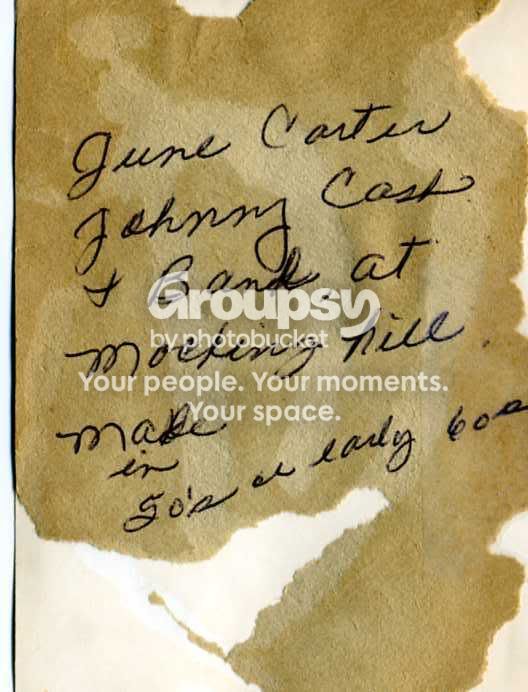
A few years ago a picture from that same era popped up on the internet; Buck Owens playing at Mockingbird Hill with Johnny Paycheck on steel. Buck was known to play there several times and it was easy to confirm the picture by the unique iron work around the stage. But Buck playing with Paycheck, on steel no less, was a revelation. Initially my thought was that since he came from Greenfield, Ohio, on the other side of Dayton, that it must have been a pickup gig for a regional musician. I had no idea just what a close musical connection Buck and Donny shared.


To the uninitiated, Paycheck is most well known for his cover of David Allen Coe’s, “Take This Job and Shove It” as well as being a bona fide country music maniac on par with Hasil Adkins, Spade Cooley or George Jones. However, if you dig just a bit deeper, you’ll soon realize that beyond the demons Johnny had the soul of an artist. Not only was he in demand as a touring musician but also as an endorser for Baldwin guitars, a tenor vocalist and songwriter.
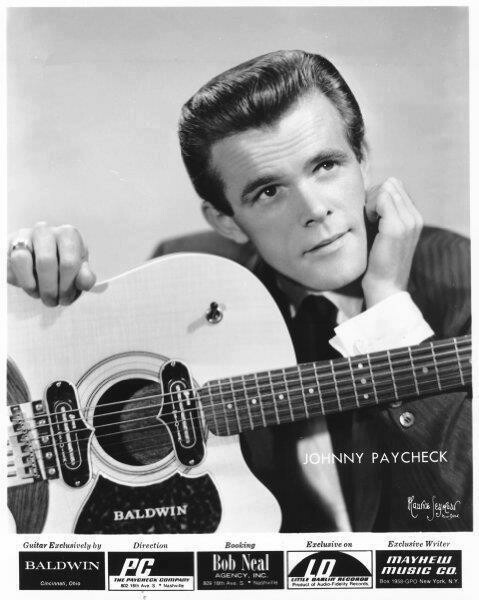

His early work on Decca, Mercury, Hilltop and especially his own Little Darlin labels are legendary. If you want a taste for the depth of his stylistic talents check out his cover of “Misty Blue” on the album Country Soul, for my money one of his most moving performances.
The history of that era in Johnny’s career has been well documented and worthy of further exploration by anyone who is curious. However, what is less well known is just how many first rate artists Johnny Paycheck collaborated with during his early career; Roger Miller, Faron Young, Ray Price, George Jones, Buddy Emmons, Porter Waggoner, Darrell McCall, Johnny Bush, Willie Nelson, Bobby Austin, the band that was to become Merle Haggard’s Strangers, Wynn Stewart as well as the aforementioned Buck Owens. In fact, after doing the research for this show one could make a pretty good case that Johnny Paycheck was not just an essential part of the classic Nashville era, but also a link with Midwestern country music as well as the heyday of the Bakersfield scene.
Paycheck’s first record under his original stage name Donny Young came out on Decca in 1958 with Roger Miller on tenor vocal. Here they are with On This Mountain Top and the B-side, It’s Been A Long, Long Time, then we’ll follow those up with another early gem, Pictures Can’t Talk Back and Johnny singing the tenor vocal with Faron Young on Country Girl and Face To The Wall.
That was Johnny Paycheck being interviewed by Eddie Stubbs on WSM in 1996. At the time he made the first recording of Apartment #9 Bobby Austin was playing bass for Wynn Stewart who was a partner and featured act at the Nashville Nevada Club in Las Vegas. Without the record in front of me it’s hard to tell if it is indeed Paycheck on tenor vocal, but it sounds pretty close. But once Bobby Austin’s career began to take off the bass player slot in the Stewart band was filled by Merle Haggard. According to an interview with Darrell McCall on Deke Dickerson’s blog, Musings of a Muleskinner, Paycheck and Haggard became good friends and “roaring buddies”. The thought of those two running around Rat Pack era Las Vegas out of their minds on pills and liquor is hard to imagine, but it happened. Merle eventually took over Wynn’s band including Roy Nichols and Ralph Mooney and renamed them The Strangers. Merle Haggard and the Strangers went on to begin their recording career on Capitol under the aegis of ace West Coast A&R man/producer Ken Nelson who also handled Buck Owens and Bobby Austin among many others. But if not for Paycheck’s co-writing with Bobby Austin on Apartment #9 country music history may have been much different. I’ll post a YouTube link to the complete Stubbs/Paycheck interview and links to Deke’s article on the show blog if you’re interested.

Skeets McDonald was an Arkansas born country artist who began performing in the 1930s recording on the legendary Fortune label out of Detroit, later moving to Los Angeles where he was a regular on Cliffie Stone’s Hometown Jamboree, appeared on Townhall Party and in several movies. Near the end of his career McDonald had moved to the Columbia label where he put out an album called Call Me Skeets featuring Johnny Paycheck on tenor vocal. Let’s take a listen to a few cuts from that record starting off with the fantastic honky tonker Same Old Town.
By the mid 60s Paycheck had established himself as a touring and studio musician as well as scoring some songwriting hits. As a stylist he could put a spin on another artist’s song by adding his own personal touch. It was on the Hank Cochran tune A-11 Johnny had his first big hit. It had first appeared on the Buck Owens album Together Again/My Heart Skips A Beat. In another excerpt from the Eddie Stubbs interview Paycheck talks about how he recorded that tune in New York City backed by The Jones Boys. Paycheck was known to have been working with Buck as far back as 1961 and also recorded another song first done by him, Close Up The Honky Tonks written by another Bakersfield legend, Red Simpson.
In the mid-90s I began to make the transition from garage punk to more roots oriented music. I sold all of my rare vinyl and began buying rockabilly, bluegrass and country records. One of those records which made a deep impression on me, and still inspires me to this day, was a George Jones compilation called Hard Core Honky Tonk, volume 1 with Johnny Paycheck on tenor vocal. Ever since then I’ve been a Possum superfan, I’ve got a “No Show” tattoo on my left wrist and went so far as to record You Better Treat Your Man Better on my first record. Years later a friend recommended a compilation of Paycheck’s early work called The Real Mr Heartache. I marveled at the similarities between Jones’s Starday and early Mercury records to Paycheck’s cuts on Little Darlin’. The two shared not only a stylistic similarity but also a life long collaborative friendship. Listening to their many duets its hard to tell where George ends and Johnny begins, their voices blended perfectly, akin to so called “brother harmonies”. However, there is a noticeable shift in Jones vocal phrasing after Paycheck’s tenure in The Jones Boys. No doubt George picked up many of his stylistic techniques from Johnny. I could probably do a while show on the topic of Possum and Paycheck but I’ll try to narrow it down to a few of my favorites. Let’s start it off with George and the Jones Boys doing a Johnny Paycheck composition, Revenooer Man.
If you like what you hear please be sure to tell a friend by sharing a link on Facebook or posting a screen cap on Instagram. You can follow the show and my music profile on both of those apps. You can also give me a follow on Spotify for The Rulers and Riders playlist. Lastly, you can also help us out by leaving a positive review on iTunes. It really helps to spread the word and grow the show.
If you’ve been following Rulers and Riders for a while you’ll know that I took a break from the show last spring to make a new record. It’s been a long slog; recruiting dependable players, finding the right studio, recording, mastering, shooting photos, working up the package design, finding a reputable marketing company, booking agents, dealing with venues and working on the schedules of others at every step of the way all the while being a dad and having a long distance relationship. But it looks like all of that diligence will be paying off early next year. By mid January my first single will be available on all the major streaming sites. It will also be available on iTunes for pre-order price and I’ll be selling some 45s at my shows. The 8 song EP will be available in February. I think it’s the best stuff I’ve ever done. I was going to wait until it’s available online but in the Christmas spirit I’ll share it with you now, the new single from Eric Kinsey and the Busted Valentines, Don’t Mind Me…
That’s about it for this week. I’ve got a few interviews and more music content lined up for this run of Rulers and Riders. Stayed tuned here for new episodes and updates on my new tunes. Until next time, we’ll see ya down the road…
Listen here:

